We didn’t put the fence in the front yard to make a statement. We put it there because it’s the only part of our property where a safe enclosure for two large, active dogs is practical.
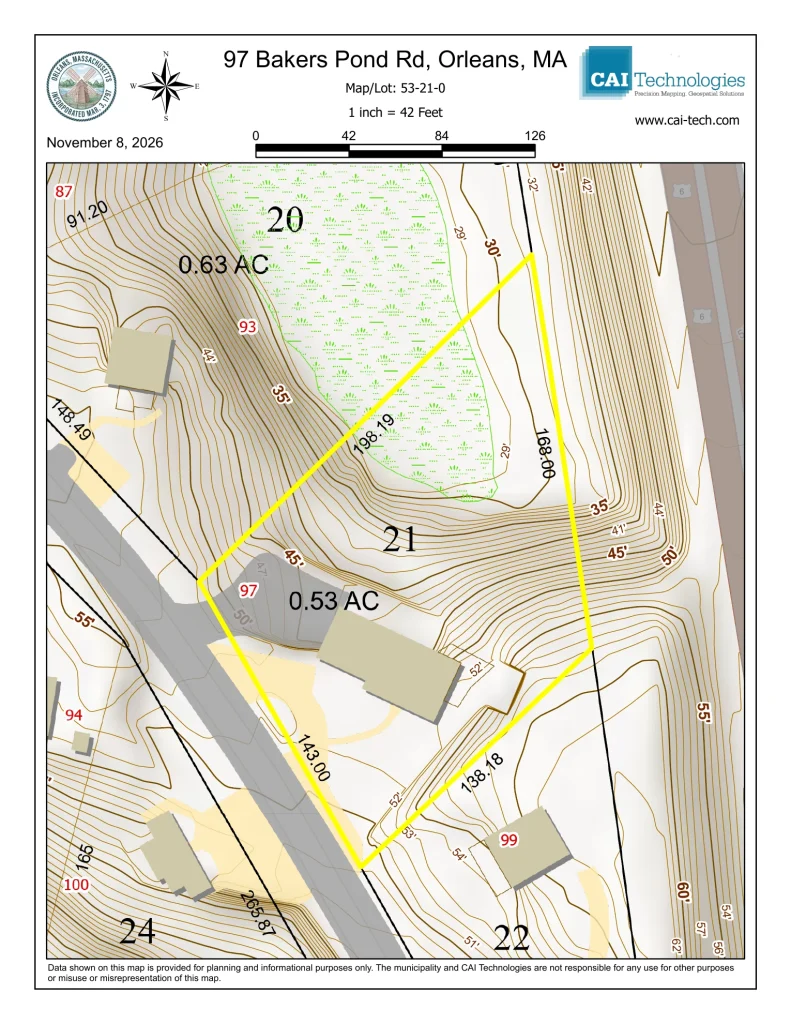
What the town’s topography map shows
- Our lot is about half an acre (0.53 acres).
- The house sits near the road at roughly the 50–52 foot contour.
- Behind the house, the contour lines bunch together: the ground drops steeply from about 45 feet to 35 feet.
- At the back of the lot, the land bottoms out at about 29–30 feet, where the map marks wetlands (green hatching).
- That’s a fall of roughly 20 feet from the house to the wetlands.
View the full topography map (PDF)
Map: Town of Orleans GIS / CAI Technologies, November 8, 2026. Data shown on this map is provided for planning and informational purposes only. The municipality and CAI Technologies are not responsible for any use for other purposes or misuse or misrepresentation of this map.
A backyard that slopes into wetlands
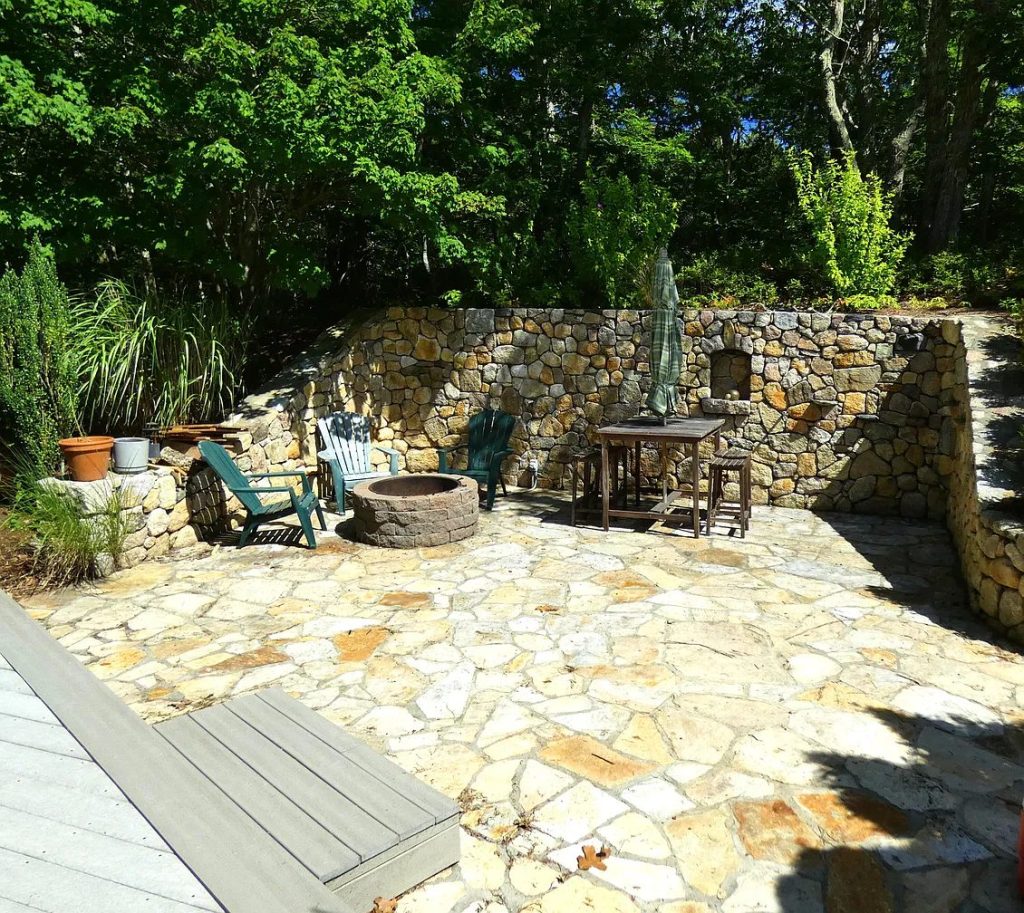
Behind the house, the land slopes down toward wooded wetlands, and the property has considerable changes in elevation. The town’s topography map shows the ground falling about 20 feet from the house to the wetlands at the back. The rear of the lot is also limited by wetland buffer rules, which made a backyard enclosure impractical.
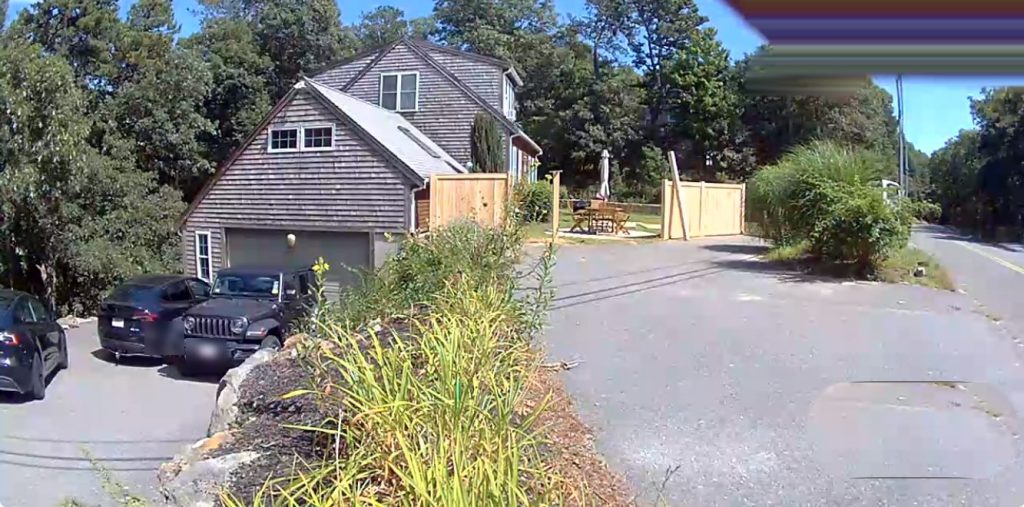
A driveway with an eight-foot drop
Our secondary driveway has a difference of roughly eight feet between its upper and lower ends. That steep grade rules out much of the side of the property as a safe, level place for the dogs to run.
The front yard: the one usable space
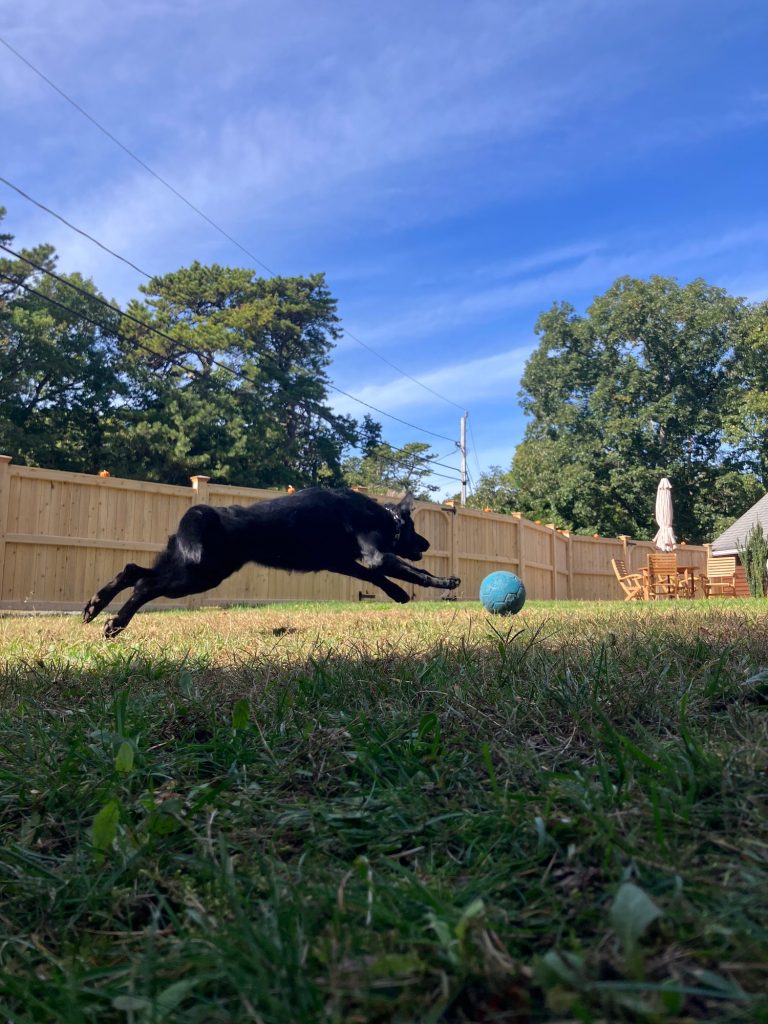
The front portion of the property is the most practical, level and usable outdoor space we have. It’s the one place where we can enclose enough room for Meadow and Venom to exercise, play and train safely. That matters for both of them, and especially for Meadow, who lives with idiopathic epilepsy and takes medication every day.
What we built, and how we chose it
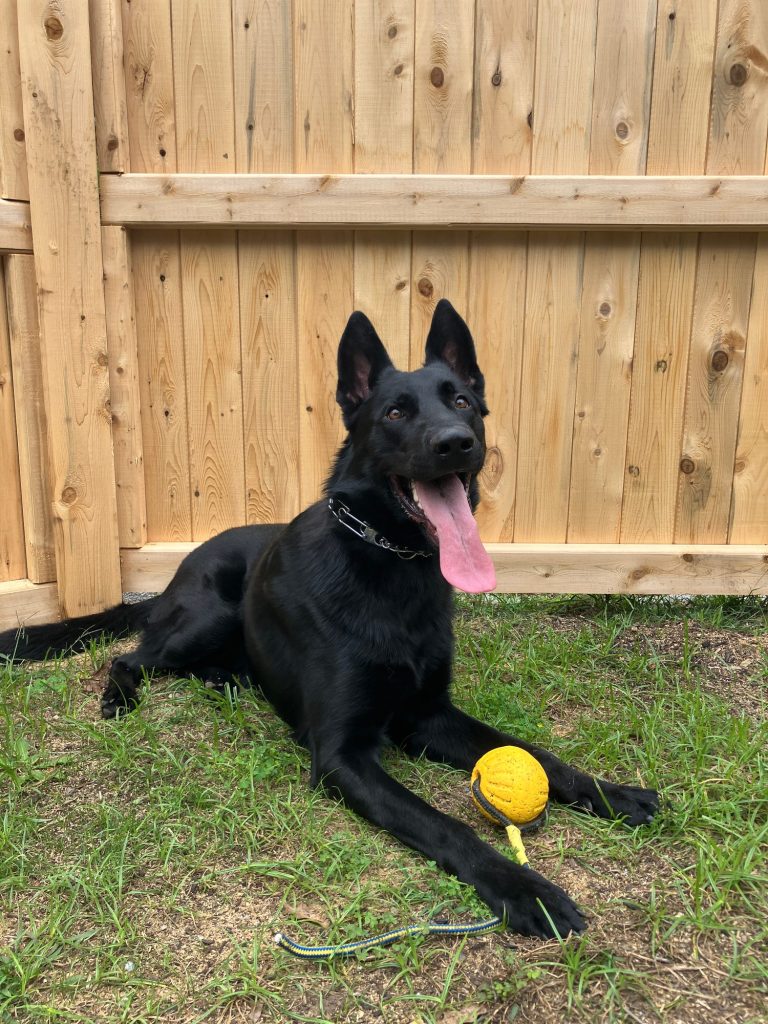
We made a significant investment in a professionally installed fence. It combines five-foot cedar privacy fencing with decorative caps and sections of black chain-link.
We chose quality materials and decorative details so the fence would look good from the road. It was never meant to block off the neighborhood or to disregard the history of the area.
- Five-foot cedar privacy fencing with decorative caps
- Black chain-link sections
- Professionally installed by Crosby Fence
- Approved by the Orleans Conservation Commission before installation
Why moving it isn’t simple
Moving the fence to the back or side would put it on steep, uneven ground near the wetlands, in areas with conservation restrictions. Relocating or removing a fence that was a substantial investment for our family would also be a major financial hit.